George Washington
📅 2026 Update: Current Access to Founding Fathers Information
Since the original article was published, there have been no significant changes regarding the Founding Fathers or related historical documents from 2024 to 2026. Information remains freely available online through various government sources. The earlier article continues further down the page and provides a solid foundation for understanding the impact of these figures on American history.
🏛️ Free Access to Information
Accessing details about the Founding Fathers is completely free. Websites like the National Archives and the White House offer this information without any fees. Readers can explore a range of documents and biographies at no cost.
📜 Immediate Availability
Information about the Founding Fathers can be accessed immediately online. There are no waiting periods or processing times involved, making it easy for students and the public to learn about these important historical figures.
📚 No Eligibility Needed
Anyone can access information about the Founding Fathers without any eligibility requirements. This means that students, teachers, and curious individuals can freely explore these resources.
⏰ No Deadlines
There are no deadlines for accessing this information. This flexibility allows individuals to learn at their own pace and revisit resources whenever they want.
📖 Educational Resources
The National Archives offers detailed biographies and historical context about the Founding Fathers. This includes insights into their roles in creating the Constitution and the Declaration of Independence. These resources help enhance understanding of America's founding principles.
📌 Key Points
- 🆓 Free access to information about the Founding Fathers.
- ⏱️ Immediate availability of online resources.
- 👍 No eligibility criteria to access information.
- 📅 No deadlines for exploring historical documents.
- 📚 Rich educational resources provided by the National Archives.
💡 Tips for Learning About the Founding Fathers
Review the details of your own situation with your attorney.
📖 Explore Official Sources
Utilize official websites like the National Archives and the White House to find reliable information. These sources provide accurate biographies and documents related to the Founding Fathers.
🎨 Check for Visual Resources
Look for murals and images that depict historical events like the signing of the Constitution. Visual representations can offer a deeper understanding of these significant moments.
📜 Use "Founders Online"
Visit the National Archives' "Founders Online" project. This resource gives access to thousands of documents from key figures like George Washington and Thomas Jefferson.
🗓️ Read Biographies of the Framers
Explore the National Archives' "Meet the Framers of the Constitution" page. It provides brief biographies of each delegate, helping you understand their contributions to the Constitution.
🇺🇸 Learn About the Declaration of Independence
Check out the National Archives' "Declaration of Independence" page. This resource includes a transcript and background information on the document, explaining its historical significance.
📚 Take Advantage of Educational Material
Use the Constitution Center’s educational resources. They offer lists of delegates and information about their roles in shaping the Constitution.
🏆 Free Options Ranked by User Reviews (2026)
No national paid service qualified for this topic based on user reviews. Instead, this section lists free government and nonprofit resources that provide valuable information about the Founding Fathers.
🥇 1. National Archives
The National Archives provides a wealth of resources on the Founding Fathers. It includes detailed biographies, historical contexts, and access to original documents. This is a go-to source for anyone looking to learn about American history.
🥈 2. White House
The White House offers profiles and contributions of the signers of the Declaration of Independence. These profiles highlight the important roles these individuals played in the founding of the nation, making it a useful resource for educators and students alike.
🥉 3. Constitution Center
The Constitution Center provides educational resources related to the Constitution and its framers. It includes lists of delegates to the Constitutional Convention and information about their contributions, which is ideal for gaining a deeper understanding of American democracy.
4️⃣ Founders Online
The National Archives' "Founders Online" project allows users to access thousands of documents from key figures. This resource provides insights into the personal thoughts and actions of the Founding Fathers, enhancing historical knowledge.
5️⃣ Meet the Framers of the Constitution
This National Archives page offers brief biographies of each delegate who attended the Constitutional Convention. It helps users understand the backgrounds and contributions of these influential figures.
🔎 What to Check Before Paying for Help
- 🏛️ Ensure the source is a recognized government or nonprofit organization.
- 📚 Look for free resources that provide the information you need.
- 🔍 Read reviews to verify the reliability of the source.
- 📅 Check for updates to ensure the information is current.
❓ Frequently Asked Questions
🤔 What are the Founding Fathers known for?
The Founding Fathers are known for their roles in drafting key documents like the Constitution and the Declaration of Independence. They laid the foundations for the United States' government and legal system.
📜 Where can I find biographies of the Founding Fathers?
Biographies of the Founding Fathers can be found on the National Archives website. They provide detailed accounts of each figure's life and contributions to American history.
🌐 Are there any costs to access information about the Founding Fathers?
No, accessing information about the Founding Fathers is completely free through official sources like the National Archives and the White House.
🏛️ How can I learn about the signing of the Constitution?
You can learn about the signing of the Constitution by visiting the National Archives. They offer murals and transcripts that depict this important event.
📚 What educational resources are available for students?
Students can access a variety of educational resources from the Constitution Center and the National Archives. These include lists of delegates, biographies, and historical documents.
⏳ Are there deadlines for accessing this information?
No, there are no deadlines for accessing information about the Founding Fathers. You can explore these resources at your own pace.
⚖️ Recent Cases Related to Founding Fathers Information
Recent court rulings may touch on topics regarding historical documents and their interpretations. These rulings can connect to the ongoing discussions about the Founding Fathers and their impact on modern law.
- Hawaii Supreme Court Rules on Maui Fire Legal Fees DisputeHawaii Supreme Court · September 30, 2026
- Guam Supreme Court Rules on Land Ownership DisputeSupreme Court of Guam · October 2, 2026
- Hawaii Supreme Court accepts case of Oscar KanoaHawaii Supreme Court · October 2, 2026
- Hawaii Supreme Court rules on protective order violationsHawaii Supreme Court · October 6, 2026
For more recent rulings, check the news section for updates.
End of October 2026 Update
George Washington is widely regarded as one of the most significant figures in American history. As the first president of the United States, his leadership and contributions to the country are still celebrated today. This article aims to provide an in-depth look at George Washington, his life, his accomplishments, and his legacy.
Early Life
George Washington was born on February 22, 1732, in Westmoreland County, Virginia. He was the eldest of Augustine and Mary Ball Washington’s six children. His father was a wealthy plantation owner, and the family owned several tobacco plantations throughout Virginia. George’s father died when he was just eleven years old, and he became the ward of his half-brother, Lawrence.
As a young man, George began a career as a surveyor. He worked for several years, surveying land in Virginia and the surrounding areas. In 1752, his half-brother Lawrence died, and George inherited his Mount Vernon estate. George resigned his post as a surveyor and devoted himself to managing the estate.
Military Career
In 1753, the French started constructing forts in the Ohio River Valley, which was then part of Virginia. Governor Dinwiddie of Virginia sent young George Washington to the Ohio River Valley to deliver a letter outlining the British position on the region to the French commander.
Returning from the mission, Washington organized a military unit to take on the French forces. He led several military campaigns in the area, which were not always successful. However, in 1758, his leadership abilities were on full display when he led a successful campaign to capture Fort Duquesne.
Washington's courageous leadership caught the attention of the British General Edward Braddock, who appointed him as his aide. In this role, Washington was to be responsible for the military's logistic support. However, Braddock's attempt to attack Fort Duquesne was an utter disaster, and the British forces were overwhelmed by the defenders. Despite this defeat, Washington showed a level head and was able to save many wounded British soldiers. His actions during the battle earned him widespread recognition, and he was promoted to colonel.
In 1775, when the American Revolutionary War began, George Washington was elected as the Commander-in-Chief of the Continental Army. He led the American forces throughout the war, winning several crucial battles, including the Battle of Princeton, the Battle of Trenton, and the Siege of Yorktown.
His military leadership was instrumental in the ultimate success of the American Revolution. After securing independence from Great Britain, Washington resigned as Commander-in-Chief of the Army and returned to Mount Vernon.
Political Career
After the conclusion of the American Revolution, Washington emerged as a hero in the eyes of the American people. In 1787, he was elected as the President of the Constitutional Convention, which was responsible for drafting the United States Constitution. Washington's experience as a military leader and his dedication to American values made him an excellent choice for this role.
In 1789, he was unanimously elected as the first President of the United States. During his two terms in office, Washington established many of the precedents that have become a cornerstone of American political culture. He established the principle of the president's two-term limit, created the Cabinet, and established the Judiciary branch of government. Furthermore, he made sure the government's capital moved from New York to Washington, D.C.
Washington focused on creating a strong federal government that could effectively govern the young country. This was not without its challenges. Washington had to implement policies that addressed the Post-war economic crisis and address the problem of piracy from the Barbary States. Nevertheless, he persevered in his mission and set the country on a path to prosperity.
Personal Life
Throughout his life, George Washington was an intensely private person. Precious little is known about his interior life. Nevertheless, we know that he was a devoted husband to his wife, Martha Washington. They married in 1759 and remained married for the rest of George's life.
Washington had no biological children of his own; however, he raised two orphaned children, John Parke Custis and Martha Parke Custis. These were the children of Martha's previous marriage. Furthermore, he was close to his nieces and nephews and took an active role in their upbringing.
Death and Legacy
After two terms as president, George Washington retired to his home at Mount Vernon. He hoped to enjoy a quiet retirement but was often sought after by political leaders, including John Adams, who encouraged him to run for president again. However, Washington declined and spent most of his time managing his plantation.
In late 1799, he caught a severe cold that progressed into pneumonia. Despite his doctors' best efforts, he passed away on December 14, 1799. The nation mourned his loss, and many commemorations of his life and legacy ensued.
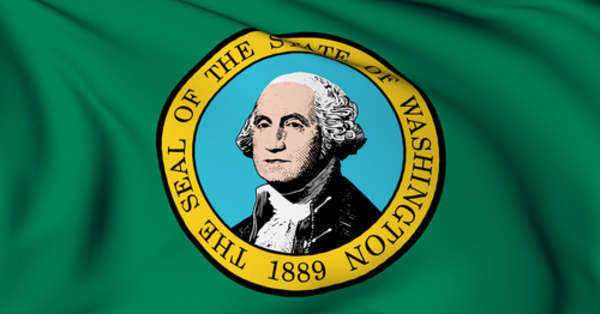
George Washington's legacy is immense. His exceptional career as a military leader, political leader, and president inspired a generation and set the country up for future success. Furthermore, his legacy has lived on in various ways, such as the names of states (Washington, DC), or monuments, such as the George Washington Monument.
As one of America's founding fathers, George Washington's life and contributions to the country will always be celebrated. He is remembered, above all, for his service to his country and his unwavering commitment to democracy, liberty, and self-government.
George Washington was the very first President of the United States of America. He served two terms as President between April 30, 1789, and March 4, 1797. During his presidency, George Washington had John Adams as his Vice President, who later became the second President of the United States.
Early Life of George Washington
George Washington was born in Westmoreland County, Virginia on February 22, 1732. George Washington's dad died when he was only 11 years old. George did not have that much education, but he taught himself to be a good woodsman, mapmaker, and surveyor (someone who makes the boundaries of areas of land.
George Washington and the French and Indian War
As a young man, George Washington joined the Virginia militia and traveled with six other men 500 miles north in order to deliver an important message to the French at the shores of Lake Erie. The French supposed to stop settling land that had been already claimed by the British. Because the French did this, there was a battle where George Washington and the rest of the men lost to the French. This was the very first battle of the French and Indian War. After many more battles, George Washington became the leader of the militia in Virginia and helped the British win the war.
After the War
In 1758, George Washington was elected as a member of the House of Burgesses, which was Virginia’s governing body. He also married Martha Custis in 1759. She was a very rich widow who already had two children. He did not have any children with her.
Because the French and Indian War was very expensive, the British placed high taxes on the colonies, which made the colonies very upset. This resulted in the Boston Tea Party, where the colonists threw a lot of tea into the Boston Harbor.
George Washington was chosen to be the Commander in Chief of the Colonial Army in 1775. The next year, the colonies declared that they were independent of the British Empire.
General Washington was the leader of the colony troops or Patriot troops. These men were not trained well, did not have good weapons, and were outnumbered. However, because of George Washington’s brilliant plans and the help of the French, the Patriots defeated the British in 1781, making the colonies independent.
George Washington and the Constitution
Afterward, the country was governed under the Articles of Confederation, but it was not good enough as a country. George Washington presided over the Constitutional Convention in 1787 in Philadelphia, where the Constitution was written. It was then ratified the next year and went into effect in 1789.
George Washington as President
George Washington was voted to be the first President by electors in early 1789 as well as in 1792. Both of these votes were unanimous. He did not want to be President for a third term because he felt that it would be giving him too much power. During his presidency, the Bill of Rights was added to the Constitution.
The End of George Washington’s Life
George Washington died at his home on December 14, 1799. After his death, the capital of the United States was moved to its current location from Philadelphia and was named Washington, D.C. in his honor.
Facts About George Washington
•George Washington wore false teeth after having all his teeth pulled out. The new ones were made out of hippopotamus ivory.
•He was the only President to receive a unanimous vote from the Electoral College.
•He was 6’2” and weighed 200 pounds.
•George Washington had six white horses. He brushed their teeth every day.